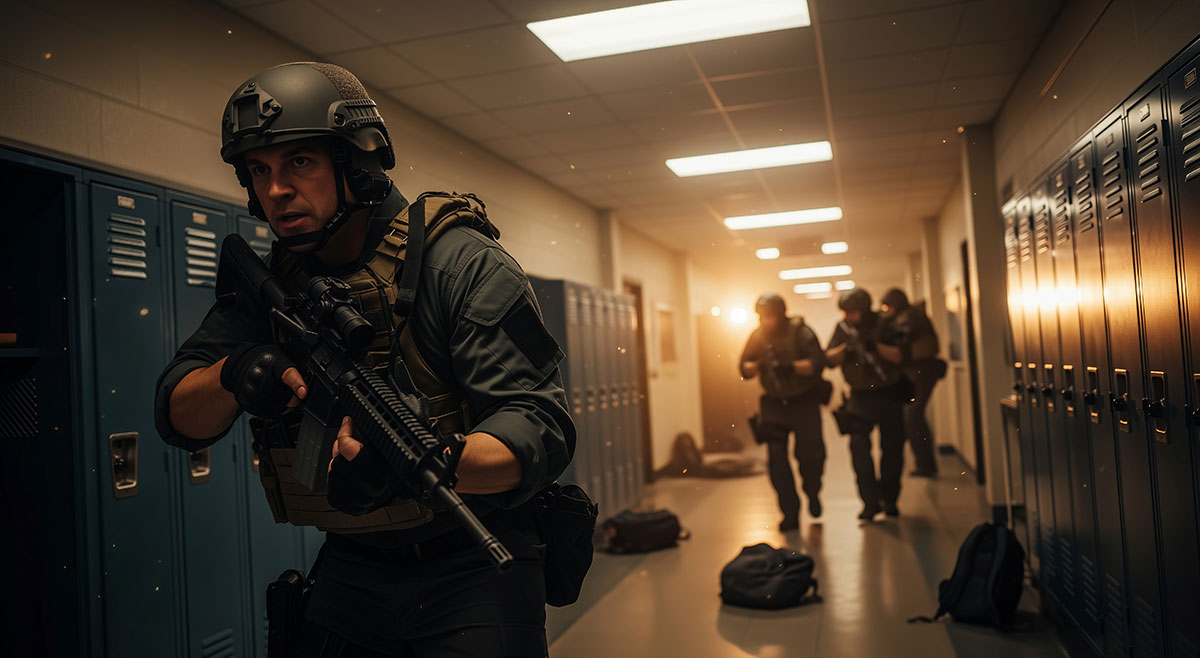
Life doesn’t give warnings. Emergencies happen suddenly, and when they do, the difference between panic and effective action can mean the difference between life and death. Over my years in law enforcement and as a SWAT Commander, I’ve learned that training under controlled pressure is one of the most effective ways to prepare for the unpredictable. Stress-tested individuals are not only more capable in emergencies, they are more confident, resilient, and able to lead others when it matters most.
The Reality of High-Stress Situations
In an emergency, our bodies react instinctively. Adrenaline surges, hearts race, and stress can overwhelm even the most capable people. Panic sets in when we are unprepared, and hesitation can have serious consequences. During SWAT operations, we train officers to perform under extreme stress because we know that real-life situations are rarely calm or predictable. The same principle applies to civilians. By experiencing controlled stress in training, people learn to manage their instincts, focus their attention, and respond effectively when the unexpected occurs.
Training Under Controlled Pressure
Controlled pressure training is not about creating fear or putting people in danger. It is about simulating realistic conditions in a safe environment. At Critical Training Solution, we design scenarios that mirror the unpredictability of real emergencies, whether that involves active assailants, medical crises, or natural disasters. Participants experience the heightened stress of these situations, learn to think clearly under pressure, and practice decisive action.
The more we expose ourselves to controlled stress, the more prepared our bodies and minds become for real emergencies. The goal is to make responses automatic and instinctive so that in the chaos of an actual event, hesitation is minimized and survival skills take over.
Mental Preparedness is the Foundation
Controlled pressure training builds mental resilience. It teaches people to recognize their physiological responses to stress and to control them rather than being controlled by them. Participants learn how fear can be managed, how focus can be maintained, and how critical decisions can be made even when adrenaline is high.
Mental preparedness is not about eliminating fear. Fear is natural and necessary. It alerts us to danger. The key is learning to channel that fear into action, using it to fuel awareness, decision-making, and protective measures. When people are mentally prepared, they act with confidence rather than freezing in the moment of crisis.
Muscle Memory and Repetition
Another key component of stress-tested training is repetition. Muscle memory is powerful. When people repeatedly practice emergency procedures under realistic conditions, their bodies learn to respond automatically. This reduces decision-making time and ensures that actions are effective when every second counts.
For example, practicing evacuation routes, barricading doors, or responding to an unexpected threat over and over allows participants to act quickly and efficiently in real-life situations. Muscle memory, combined with mental preparedness, creates a reliable foundation for survival.
Leadership Under Pressure
Controlled stress training also develops leadership. In emergencies, leadership is not about authority; it is about action. People who are trained under pressure are more likely to step forward, make decisions, and guide others to safety. Leadership skills cultivated in training translate directly to real-world emergencies, where quick, decisive action can protect multiple lives.
Communities, workplaces, and schools all benefit when individuals are trained to lead under stress. When people feel confident in their ability to respond, they influence others positively, reduce chaos, and help maintain safety. Leadership is strengthened by practice, repetition, and the ability to remain calm under pressure.
Applying Stress-Tested Training to Everyday Life
Controlled pressure training is not limited to law enforcement or first responders. Everyone can benefit from it. Businesses can incorporate realistic emergency drills for employees. Schools can teach students and staff how to respond to crises. Families can practice fire drills, evacuation plans, and first aid under guided scenarios.
The principle is simple: exposure to controlled stress builds preparedness, confidence, and resilience. When real emergencies occur, the mind and body are ready to respond rather than react instinctively out of fear. The training creates calm, focused, and capable individuals who are prepared to act decisively.
Building a Culture of Resilience
When stress-tested training is applied at a community level, the benefits multiply. Communities that prioritize preparedness develop networks of capable individuals who can support each other during crises. Confidence grows, panic decreases, and collective resilience strengthens. People feel empowered knowing that they, and those around them, are ready to face the unexpected.
Preparedness also fosters trust. When individuals know that leaders and peers are trained and capable, they are more likely to remain calm and follow guidance in an emergency. This shared readiness is the backbone of a resilient community.
Conclusion
Controlled pressure training is more than a tool for law enforcement. It is a proven method for building mental and physical readiness, confidence, leadership, and resilience. By exposing ourselves to realistic, stress-inducing scenarios in a safe environment, we learn how to act decisively when the stakes are highest.
Whether you are a parent, a teacher, a business owner, or a community member, the principle is the same. Preparing under controlled pressure transforms fear into action, hesitation into confidence, and uncertainty into leadership. Stress-tested individuals are life-ready, capable of protecting themselves and those around them.
Emergencies are unpredictable, but your response doesn’t have to be. By training under pressure, practicing repetition, and building mental resilience, we can all become stronger, more capable, and ready to face the unexpected with confidence.